
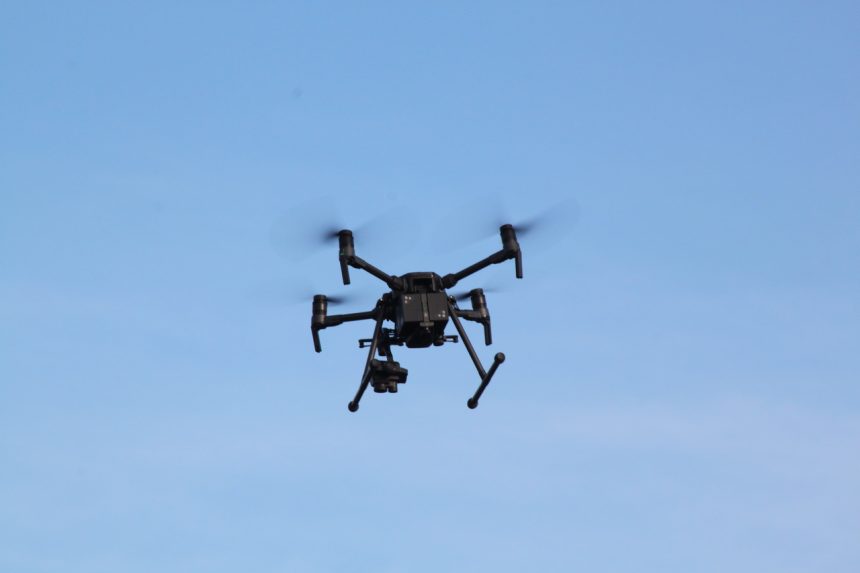
Pittman-Robertson dollars fund leading-edge wildlife research
Interested people are interesting. It’s cliché, but true: enthusiasm is infectious. Spend time talking to wildlife and fisheries professionals and you will find that their occupation is not just a job.
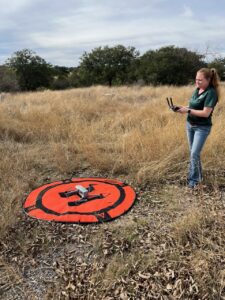
So it is with Deanna Pfeffer, a wildlife biologist with the Texas Parks and Wildlife Department, whose enthusiasm for conservation is readily apparent. She is stationed at Kerr Wildlife Management Area in southwest Texas, some 150 miles west of the capital city of Austin. The WMA is in the fabled Hill Country, rich in natural beauty, and wildlife that occupies mixed-oak savanna—expansive grasslands with thin canopies of trees and shrubs.
Pfeffer led the research on the use of thermal imaging video cameras mounted on unmanned aerial vehicles, commonly called drones, to census white-tailed deer. The intent was to discover the usefulness of drones and heat-sensing cameras in counting whitetails and potentially other wildlife species in Texas and beyond.
A census is a complete enumeration. Pfeffer had the ability to census a known population white-tailed deer on the 6,500-acre WMA. Pfeffer and colleagues parsed off and fenced 288 acres of woodlands and oak-meadow openings with a known number of deer.
The leading-edge conservation work was an intersection science, technology, know-how, and reliable Pittman-Robertson funding—the federal excise taxes paid by the manufacturers of firearms, ammunition, and archery gear. The funding pays Pfeffer and her colleague’s salaries and for the high-tech gear used in the research, not to mention the daily management activities conducted on the WMA for a whole host of wild mammals and birds.
Pfeffer’s deer research using drones built off other Pittman-Robertson-funded drone work on waterfowl and whitetails by wildlife biologists with the Wisconsin and Minnesota departments of natural resources.
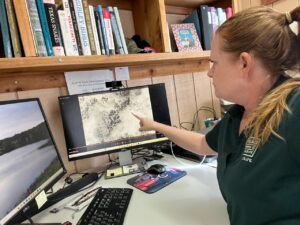
Pfeffer designed the drone flights to cover the entire 288 acres. Flights and video recording occurred once near dawn and again near dusk over three days in December, gathering hours of video. The results show great promise and utility in wildlife management. Three independent observers reviewed video and counted deer seen as a black objects on the screen. That is, warm deer were revealed as dark objects. In the end, the observers slightly undercounted the true, known number of white-tailed deer. But that was no great detriment.
“We’re happy with the outcome,” said Pfeffer. “The study returned really good results. We’ll take what we learned and expand into other seasons and times of day and are considering using artificial intelligence to potentially better locate the heat signature of deer on video, and perhaps with greater resolution to identify ages and sexes.”
White-tailed deer is a primary species managed on the WMA, along with Rio Grande turkey, bobwhite quail, and rare golden-cheeked warbler, a handsome yellow and black and white songbird with an affinity for the Hill Country.
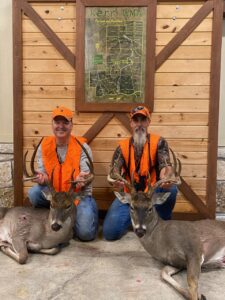
“Pittman-Robertson funds are absolutely imperative not only for our research, but everyday management,” said Pfeffer. “We adhere to Aldo Leopold’s maxim of the tools of wildlife management, axe, cow, plow, fire, and gun.” Pfeffer and colleagues use prescribed burns, grazing allotments, and regulated hunts to sustain the public benefit of acquiring local free range food on the public land, not to mention the sheer joy of watching wildlife in wild places.
Pfeffer and her TPWD colleagues Justin Foster and John Kinsey published the findings of the thermal imaging research in the Journal of Fish and Wildlife Management where other professionals can learn about, replicate, and expand upon their endeavors.
“Drones have the potential to give big game managers an effective and relatively inexpensive tool to monitor and manage wildlife,” said Pfeffer. “Drones can go where people can’t; it’s safer and far less expensive than fixed-wing aircraft.”
The State of Texas purchased the land that became Kerr WMA in 1950 with Pittman-Robertson funds.
—Craig Springer, for the USFWS – Office of Conservation Investment